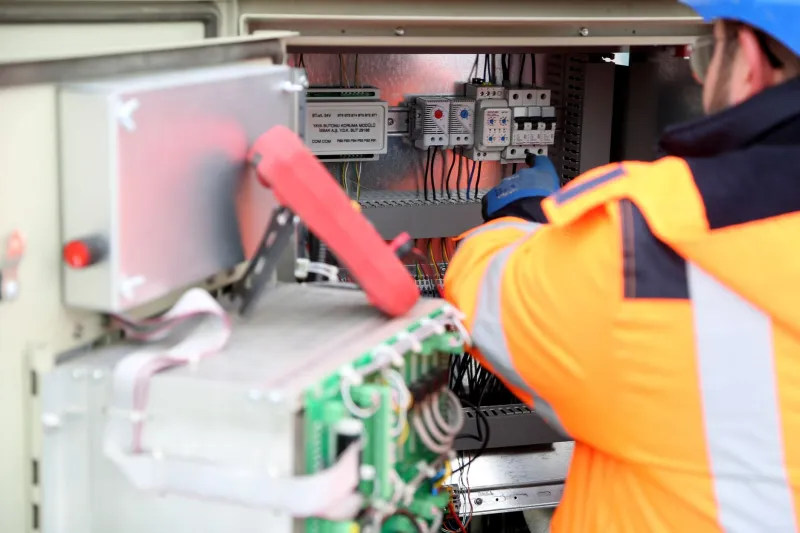
Beyond the Beep: Rethinking the Consumer Unit as a Property's First Responder
Smoke alarms rightly occupy a prominent place in UK property safety. They are visible, audible and subject to familiar advice about weekly testing. The consumer unit, by contrast, is often hidden in a cupboard, garage or communal corridor and receives attention only when something goes wrong. That imbalance deserves challenge. In our view, the consumer unit is the silent custodian of the electrical installation, and it warrants more proactive attention than it typically receives in 2026.
The first responder nobody notices
A smoke alarm is a warning device. A consumer unit is a control and protective device. It contains the main switch, circuit breakers and residual current devices that limit the consequences of faults. When a cable is damaged, an appliance fails or water enters an accessory, the protective devices are expected to disconnect the supply before fire or shock occurs. That expectation is central to electrical safety, yet it is rarely examined until an incident exposes a weakness. Property managers who service fire alarms and emergency lighting should ask whether the electrical intake and distribution board receive comparable attention.
What a consumer unit is asked to do
Modern living places varied demands on a board. Electric vehicle charging, heat pumps, induction hobs, home offices and commercial kitchen equipment can all increase load and fault energy. An older board may still function, but functioning is not the same as being fit for purpose. Lack of RCD protection on some circuits, insufficient breaking capacity, worn devices or a lack of spare ways can leave a property exposed. These are not abstract concerns; they are the practical reasons why scheduled inspection and modernisation matter.
The case for RCBO protection
One of the most meaningful upgrades is the replacement of older split-load arrangements with individual RCBO protection. An RCBO combines overcurrent and residual current protection for a single circuit. This arrangement reduces the inconvenience and risk associated with a single RCD tripping and taking several circuits out of service. It also provides more targeted protection, which is valuable in homes, Houses in Multiple Occupation and commercial premises where continuity of supply and clear fault identification matter. RCBOs are not a universal solution to every installation defect, but they are a significant improvement in many older boards.
Inspection is not a luxury
An Electrical Installation Condition Report is sometimes treated as a box-ticking exercise, commissioned only at sale or letting. That view is short-sighted. An EICR identifies deterioration, inadequate earthing, overloaded circuits and departures from BS 7671. For duty holders, it provides evidence of a considered approach to safety. For homeowners, it offers clarity about the condition of an installation that may have been altered repeatedly over decades. A scheduled inspection is far less disruptive than an emergency repair, and it allows remedial work to be planned rather than improvised.
The silent custodian argument
We use the term silent custodian deliberately. The consumer unit does not announce its condition. It does not chirp when a device is nearing the end of its service life or when a circuit is being asked to carry more than it should. It waits, protects and, if necessary, disconnects. That quiet reliability is valuable, but it can encourage neglect. Treating the board as a silent custodian means accepting a duty of care: keep it accessible, keep records, test protective devices and replace obsolete equipment before failure occurs. It also means resisting the temptation to treat repeated tripping as an inconvenience rather than a message.
A practical prescription for 2026
For homeowners, the priority is a visual check, a working RCD test and a professional review if the board is old, has been altered or lacks RCD protection. For property managers, the priority is a documented regime that includes fixed wire testing, portable appliance testing where relevant, and a clear record of remedial actions. For landlords and responsible persons, the consumer unit should feature in routine compliance conversations alongside fire safety and emergency lighting. None of this needs to be alarming. It is simply a matter of giving the protective heart of the installation the attention it deserves.
Conclusion
Smoke alarms save lives, and their prominence is justified. The consumer unit also saves lives, but it does so silently and from a cupboard. In 2026 and beyond, UK property safety would benefit from a more balanced view: one that treats the consumer unit as a first responder rather than an afterthought. Custodian Electrical believes that proactive inspection, appropriate RCBO protection and scheduled maintenance are not expensive extras. They are the practical expression of stewardship over the electrical installation.