Who Owns Which Wire? A Circuit-Level Duty Map for UK Rented Property

Photo: Jonathan Billinger, CC BY-SA 2.0, via Wikimedia Commons
Electrical safety in rented property is often discussed as a single duty: the landlord must obtain an EICR and keep the installation in repair. In practice, responsibility is more granular. It follows circuits, equipment and boundaries. A fault in a tenant’s kettle is not the same as a fault in the socket outlet supplying it; a communal stairwell is not the same as the inside of a flat. Where those distinctions are left vague, disputes and safety gaps tend to appear.
This article offers a practical duty map for landlords, property managers and letting agents. It is general guidance rather than legal advice, and the precise position depends on the tenancy, the property and the nation of the UK. In England, the Electrical Safety Standards in the Private Rented Sector (England) Regulations 2020 provide the core fixed-installation framework. Wales and Scotland have their own regimes, and leases or management agreements may allocate additional responsibilities.
Start with the fixed installation
The clearest line is between the fixed electrical installation and appliances that are not fixed. The fixed installation includes the consumer unit, wiring, socket outlets, light fittings, fixed heating, fused connection units and associated earthing and bonding. In the private rented sector in England, landlords must ensure the installation is inspected and tested at least every five years by a qualified person, obtain an EICR, carry out remedial work within the specified period, and supply copies to tenants and others as required.
That duty does not automatically extend to every appliance in the property. A tenant’s own television, laptop charger or hairdryer is generally the tenant’s responsibility. A landlord-supplied cooker, fridge or washing machine sits in a different category: the landlord should ensure it is safe and properly maintained, and should keep instructions and records where possible. Portable appliance testing is not a blanket statutory requirement for private landlords, but a risk-based approach to supplied appliances is sensible and consistent with a duty of care.
Consumer unit and distribution
The consumer unit is the control point for the duty map. The landlord or owner should ensure it is secure, clearly labelled and accessible for legitimate maintenance. The circuit schedule should match the installation, and any spare ways should be identified. RCD or RCBO test buttons should be checked in accordance with manufacturer guidance, and any device that fails should be investigated by a qualified electrician. Tenants should be told how to isolate the supply in an emergency, but they should not be expected to remove covers or alter wiring.
A room-by-room and circuit-by-circuit view
A duty map becomes useful when it is applied to the property as it is actually used. The following examples are not exhaustive, but they show how responsibility can be assigned without ambiguity.
Kitchen
Fixed wiring, socket outlets, the cooker circuit, immersion heater spur and boiler supply are installation matters. A landlord-supplied integrated dishwasher or cooker is a supplied appliance. A tenant’s freestanding microwave or kettle is tenant equipment. If a tenant’s appliance damages a socket outlet, the landlord remains responsible for repairing the fixed installation, while the appliance itself remains the tenant’s concern. Permission should be required before any tenant installs a new appliance that requires alteration to the fixed wiring.
Bathroom
Electric showers, shaver sockets, extractor fans, underfloor heating and fixed lighting are installation matters. Supplementary bonding and RCD protection should be confirmed as part of the EICR and any alteration. A tenant’s hairdryer or electric toothbrush charger is tenant equipment. Portable equipment should not be used where it is damaged, and the tenant should report any sign of overheating at a socket or accessory.
Bedrooms and living areas
Sockets, lighting circuits and fixed heaters belong to the installation. Hardwired smoke and heat alarms may fall under separate fire safety duties, but their supply and interconnection still need to be understood. Tenant lamps, extension leads and chargers are tenant equipment. The landlord should not assume that an EICR covers them, and the tenant should not assume that a landlord will repair them.
Outbuildings, gardens and EV charging
Garages, sheds, garden lighting and external sockets are often overlooked. If they are supplied from the landlord’s installation, they form part of the fixed installation and should be included in inspection arrangements where accessible and relevant. An EV charge point provided by the landlord is a fixed piece of equipment with its own commissioning, warranty and maintenance needs. A tenant-owned charge point should not be installed without written permission and a proper assessment of the supply.
Communal areas
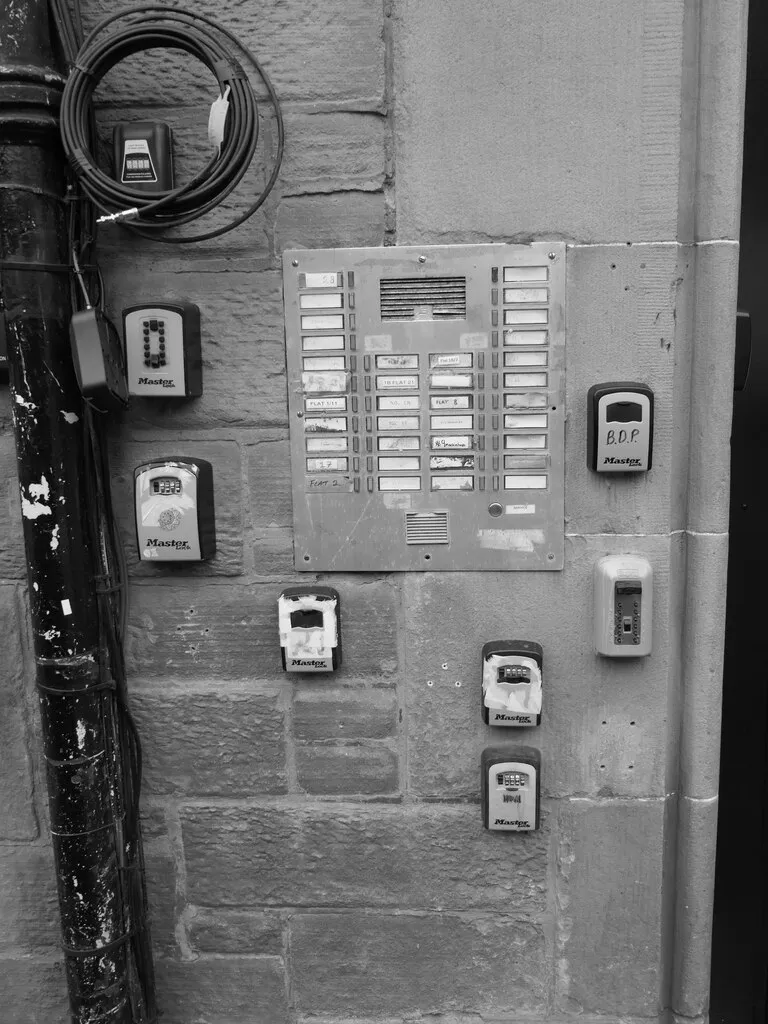
In blocks of flats, HMOs and shared buildings, the boundary between the flat and the common parts matters. Stairwell lighting, communal sockets, door entry systems, emergency lighting and fire alarm supplies may be the responsibility of the landlord, the freeholder, a residents’ management company or a managing agent. These duties should be set out in the lease or management agreement and reflected in the maintenance schedule.
Supplied appliances and tenant equipment
A simple asset register prevents much confusion. For each supplied appliance, record the make, model, location, date of purchase or supply, instructions and any maintenance or testing history. For tenant equipment, make clear that the tenant is responsible for its condition and safe use. If a tenant reports a burning smell from their own appliance, the landlord should still take the report seriously, advise the tenant to stop using it and check that the fixed installation has not been affected.
Turning the map into a management routine
A workable duty map should be written down and reviewed. It can include a circuit schedule, a room-by-room equipment list, a record of who owns each supplied appliance, a reporting route for tenants and a clear process for approving alterations. New tenants should receive the current EICR copy and simple safety information. Contractors should be told where the consumer unit is, what is communal and what is demised to the tenant. When a property changes manager, the map should transfer with the keys.
Clarity is a safety control
For Custodian Electrical, compliance is not only a certificate in a file. It is the shared understanding of who looks after which wire, which appliance and which space. A circuit-by-circuit duty map turns a broad legal obligation into practical assignments. It helps landlords demonstrate diligence, helps tenants report the right issue to the right person and helps property managers avoid the grey areas where safety gaps quietly develop.