The Guest-Ready Property: Electrical Safety as a Hospitality Standard for UK Short-Term Lets
Photo: Richard Webb , CC BY-SA 2.0, via Wikimedia Commons
A short-term let is a home, a business and a promise of safety. Guests may not know where the consumer unit is, but they will use every socket, kettle and phone charger in the property. They will also judge the space on whether it feels cared for. Electrical safety belongs in that judgement, not only in the compliance file.
The EICR is the baseline, not the finish line
An Electrical Installation Condition Report gives the owner and manager a structured view of the fixed installation. For short-term lets in 2026, an EICR should be treated as the baseline evidence of reasonable care, even where the property does not fall neatly within private rented sector rules. Observations coded C1 or C2 require attention; C3 observations should be planned into maintenance rather than forgotten.
The certificate itself does not make a property safe. What matters is the remedial work, the date it was completed and the paper trail that connects the two. A guest-ready property has a current report, a clear schedule for any outstanding items and a manager who understands what the codes mean.
Appliance checks and the guest-facing inventory
Guests encounter the electrical installation through appliances. Kettles, hairdryers, chargers, lamps and portable heaters are used intensively and sometimes carelessly. Visual checks between lets are essential: look for damaged plugs, frayed leads, cracked casings, scorched sockets and missing covers. Portable appliance testing has a role, particularly for high-risk or commercially used items, but the first line of defence is a person who knows what to remove from service.
Keep an inventory of appliances and note when each was checked or replaced. If an item looks damaged, remove it. If a guest reports a fault, record it and act before the next arrival. That discipline is more useful than a drawer full of old certificates.
RCD protection and the consumer unit
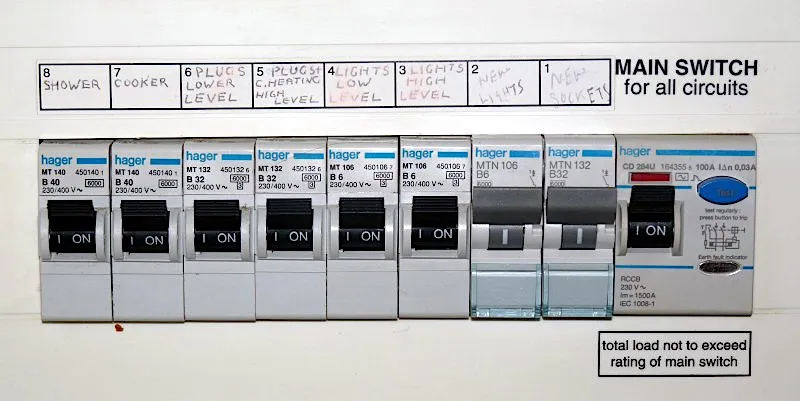
RCD or RCBO protection should be present for socket circuits, bathroom circuits and outdoor equipment, in line with the current edition of BS 7671. The consumer unit should be labelled clearly and accessible for testing, even if it is not on display. Test buttons should be operated at planned intervals and the results recorded.
Guests should not be encouraged to treat the consumer unit as a reset station. A brief note in the welcome pack can explain that a trip should be reported rather than repeatedly reset. If the property has shared supplies or outbuildings, the labelling needs to be especially clear.
Sockets, USB outlets and EV charging
Socket provision should match how guests actually use the property. A kitchen with too few sockets invites extension leads and daisy-chained adaptors. USB socket outlets can be convenient, but they should be of reputable quality and checked for damage. Outdoor sockets need appropriate protection and should not be used with domestic extension leads in wet conditions.
Where an EV charge point is offered, it should have a dedicated supply and be installed by a competent electrician. Guests should not be invited to charge vehicles from a domestic socket via an extension lead. Clear instructions and a named contact are part of the safety case.
A documented pre-let routine
A practical routine might include a visual check between every let, a monthly RCD test, a quarterly appliance review and an annual review of certificates and remedial work. Photographs of damaged items, a simple fault log and a record of who attended are enough to turn good intentions into evidence.
The routine should be proportionate to the property. A one-bedroom flat and a large rural let will not have identical risks, but both benefit from a written checklist, a responsible person and a clear escalation route.
Briefing guests and handling faults
A welcome pack can include a short electrical safety note: where the consumer unit is, what to do if a socket or appliance appears damaged, and how to report a fault. The tone should be helpful rather than alarming. Guests should be told not to reset an RCD repeatedly and not to use equipment that looks damaged.
Response matters as much as paperwork. A reported fault should be acknowledged, assessed and either repaired or isolated before the next guest arrives. Platform requirements and insurer expectations are easier to satisfy when the property has a visible electrical routine.
In 2026, guests expect a short-term let to feel professionally managed. Electrical safety is part of that standard. Custodian Electrical supports hosts and property managers with inspection, testing and practical advice so that the certificate in the drawer is backed by a property that is genuinely ready for guests.