The Paperwork Behind the Sockets: Electrical Records That Should Survive a House Sale

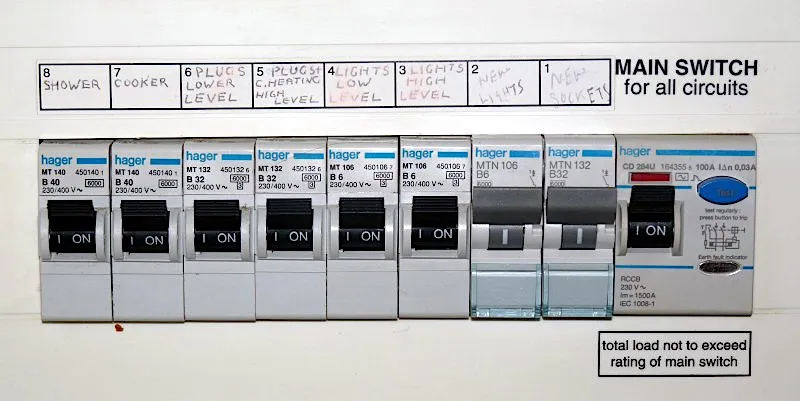
Photo: Jaggery , CC BY-SA 2.0, via Wikimedia Commons
When a home changes hands, the conveyancing pack usually tells the buyer where the boundaries are, what is included in the sale and which fixtures remain. Electrical records are less visible. They sit in a drawer, a loft folder or an email archive, and are easily lost between exchange and completion. Yet the condition and history of a property’s electrical installation is part of what the buyer is inheriting. A well-kept handover file is not bureaucracy for its own sake; it is evidence of custodianship and a practical aid to safe occupation.
Why electrical records matter at completion
An electrical installation is a long-life asset. Cables, consumer units, protective devices and earthing arrangements may remain in service for decades, with alterations made along the way. Without records, each new owner starts from a position of uncertainty. A buyer may not know whether a loft conversion circuit was certified, whether an outbuilding supply is protected, or when the consumer unit was last inspected. A seller, meanwhile, may find that missing paperwork delays enquiries or undermines confidence.
For owner-occupied sales in England, an EICR is not universally a legal precondition in the way it is for much of the private rented sector. That does not make it unimportant. An Electrical Installation Condition Report gives a documented assessment of the installation against BS 7671, together with a schedule of test results and observations coded by urgency. Even where no report is required, having one available can answer questions before they become concerns. In rented property, the position is different and the applicable regulations must be followed; in all cases, the handover file should reflect the property’s actual use and history.
What the file should contain
A useful electrical handover file is more than a single certificate. It should tell a coherent story of the installation, its alterations and its maintenance. Sellers should aim to provide:
- The most recent EICR, including the schedule of test results, limitations and the date of the next inspection.
- Electrical Installation Certificates for new circuits or significant alterations, and Minor Electrical Installation Works Certificates for smaller notifiable or recordable work.
- Building Regulations compliance evidence for notifiable work in England and Wales, such as a Part P certificate or a building control completion certificate.
- The consumer unit schedule or circuit chart, with clear labels for each way and a note of any spare or unused circuits.
- Records of remedial work, including invoices, test results and photographs where available.
- Warranty and guarantee documents for consumer units, protective devices, EV charge points, solar photovoltaic systems, battery storage, heat pumps and other fixed electrical equipment.
- Manufacturer instructions and operation and maintenance information for specialist equipment.
- Details of main protective bonding, earthing arrangements and any dual supplies, including solar PV or standby generators.
- A note of the qualified electrician or contractor who last worked on the installation, with contact details if the seller is willing to share them.
Labels matter as much as paperwork. The consumer unit should be clearly marked, and isolation points for external supplies, EV charge points, solar PV and outbuildings should be identifiable. A buyer should not have to guess which switch controls which circuit.
What sellers should prepare
Preparation should begin before the property is marketed, not the week before completion. A seller who knows that records are incomplete can commission an EICR and ask a qualified electrician to address any safety-critical observations. Known dangerous conditions should not be concealed; they should be documented and, where appropriate, made safe. Replacing missing labels and assembling digital copies of certificates is a modest task compared with the delays that incomplete information can cause.
The handover file should be stored in a format that survives the move. A labelled folder is useful, but a digital copy in a clearly named folder is easier to pass to solicitors, buyers and future contractors. Sellers should retain their own copy for tax, warranty and insurance purposes, while providing the buyer with a complete set.
What buyers should ask for
Buyers should raise electrical records early in the conveyancing process. Ask specifically for the EICR, all installation and minor works certificates, building control evidence, consumer unit schedules, warranties and any records of remedial work. Check that documents relate to the correct address and that the dates and limitations are understood. A certificate for a previous owner’s alteration is still useful history, but it is not a guarantee of the current condition.
If records are absent, a buyer should factor in the cost of an EICR and any resulting work. It is reasonable to ask the seller for permission to commission an inspection before exchange, although access and timing may limit this. After completion, an early review by a qualified electrician can confirm the consumer unit labelling, test protective devices and identify any immediate concerns.
The handover conversation
A short walkthrough can add context that paperwork cannot. Identify the consumer unit, main switch, RCD or RCBO test buttons, meter position, isolation points and any specialist equipment. Photograph the labels and ask how recently each item was serviced. If the property has solar PV, battery storage or an EV charge point, ask for the commissioning documents and confirm who is responsible for maintenance.
A mark of custodianship
At Custodian Electrical, the practical view is that a good electrical handover file does not make a property safe by itself. It does, however, allow the next owner to make informed decisions and to maintain the installation rather than merely react to faults. For sellers, it is an opportunity to leave the property in good order. For buyers, it is a prompt to ask better questions. In that sense, the file is a small but meaningful part of the custodianship that passes with the keys.