Tripping Is a Message: A Property Manager’s Protocol for RCD Faults
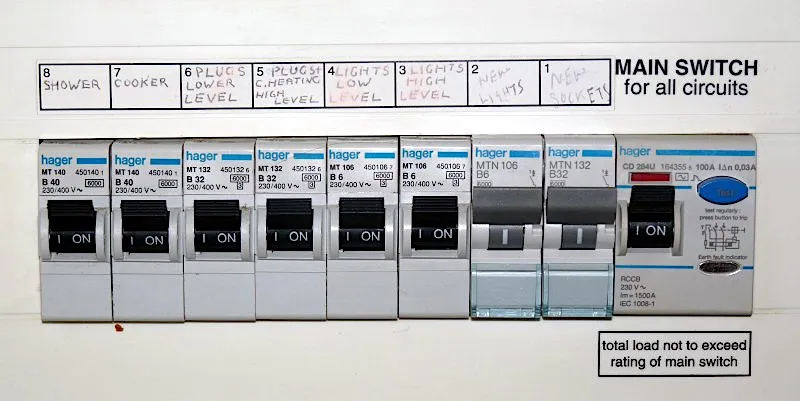
Photo: Pfnicholls, CC BY-SA 4.0, via Wikimedia Commons
An RCD that trips once may simply have done its job. An RCD that trips repeatedly is usually reporting a fault that has not gone away. For property managers, the temptation is to treat the consumer unit as an inconvenience: reset the device, reassure the occupant and move on. That approach carries risk. The reset button restores supply; it does not repair insulation, remove moisture or correct a damaged cable.
Why repeated tripping deserves attention
A residual current device monitors the balance of current in a circuit. When it senses a small imbalance, it disconnects the supply quickly enough to reduce the risk of electric shock. That is a safety function, not a fault. The fault lies in whatever is causing the imbalance: a failing appliance, water ingress, a damaged flexible lead, rodent damage, a loose connection or a DIY alteration.
Repeated resetting without investigation can mask a deteriorating condition. It can also encourage occupants to treat a safety device as an annoyance. In communal or tenanted property, that culture is difficult to reverse once established.
Safe isolation comes before diagnosis
Fault-finding on a fixed installation is not a tenant task and not a general maintenance task. Before any inspection, the relevant circuit should be safely isolated, locked off where practicable and proved dead with an approved voltage tester. Consumer unit covers should not be removed by anyone who is not competent to do so.
Property managers can still support the process by keeping access arrangements clear, recording what happened and ensuring occupants do not interfere with the installation. If there is signs of overheating, burning, water ingress or visible damage, the circuit should remain isolated and an electrician should attend promptly.
Appliance-by-appliance elimination
Where it is safe to do so, a competent person can unplug all appliances from the affected circuit, reset the RCD once and then reintroduce appliances one at a time. This simple sequence often identifies a faulty kettle, charger or extension lead. It does not identify faults in fixed appliances, hidden wiring or shared circuits.
If the RCD trips with nothing plugged in, the cause is likely to be in the installation itself. If it trips only when a particular appliance is used, that appliance should be removed from service and tested or replaced. Extension leads, adaptors and multi-way blocks deserve particular suspicion in rented property, where socket provision may be inadequate for the way the space is actually used.
Record-keeping for communal and tenanted properties
A written log is valuable evidence that the property is being managed responsibly. Record the date and time of each trip, the circuit affected, what occupants reported, what was unplugged, whether the device reset and what action followed. For communal properties, note any shared circuits and inform residents clearly when access is needed.
In tenanted property, records should be factual and proportionate. Avoid attributing blame to occupants. Keep electrical certificates, remedial works and contractor reports together so that the maintenance history is coherent. If an RCD has tripped repeatedly over weeks, the pattern itself is useful information for the attending electrician.
When to call a qualified electrician
Call a qualified electrician if the RCD will not reset, if it trips with no appliances connected, if the cause is not obvious after basic elimination, or if the trip is accompanied by smell, heat, water or visible damage. Communal installations, EV charge points, outdoor circuits and recently altered wiring should also be treated as priority calls.
An electrician can carry out insulation resistance testing, ramp testing and circuit tracing. That work turns a vague complaint into a defined fault and a documented repair.
Briefing occupants without encouraging DIY resetting
Occupants should understand that the RCD is a safety device, not a nuisance. A sensible message is: if the device trips, switch off and unplug appliances on that circuit, reset once only if it is safe to do so, and report a repeat trip. Do not tape the switch, fit a larger device or ignore the problem.
Clear labelling at the consumer unit helps. So does a named contact and a simple reporting route. The aim is not to frighten occupants, but to make sure a repeated trip is treated as information rather than an inconvenience.
Custodian Electrical works with property managers to investigate RCD faults safely and to leave a clear record of what was found. The reset button has its place, but it is not a repair.