The Lights That Carry the Exit: Emergency Lighting Routines for UK Small Commercial Premises
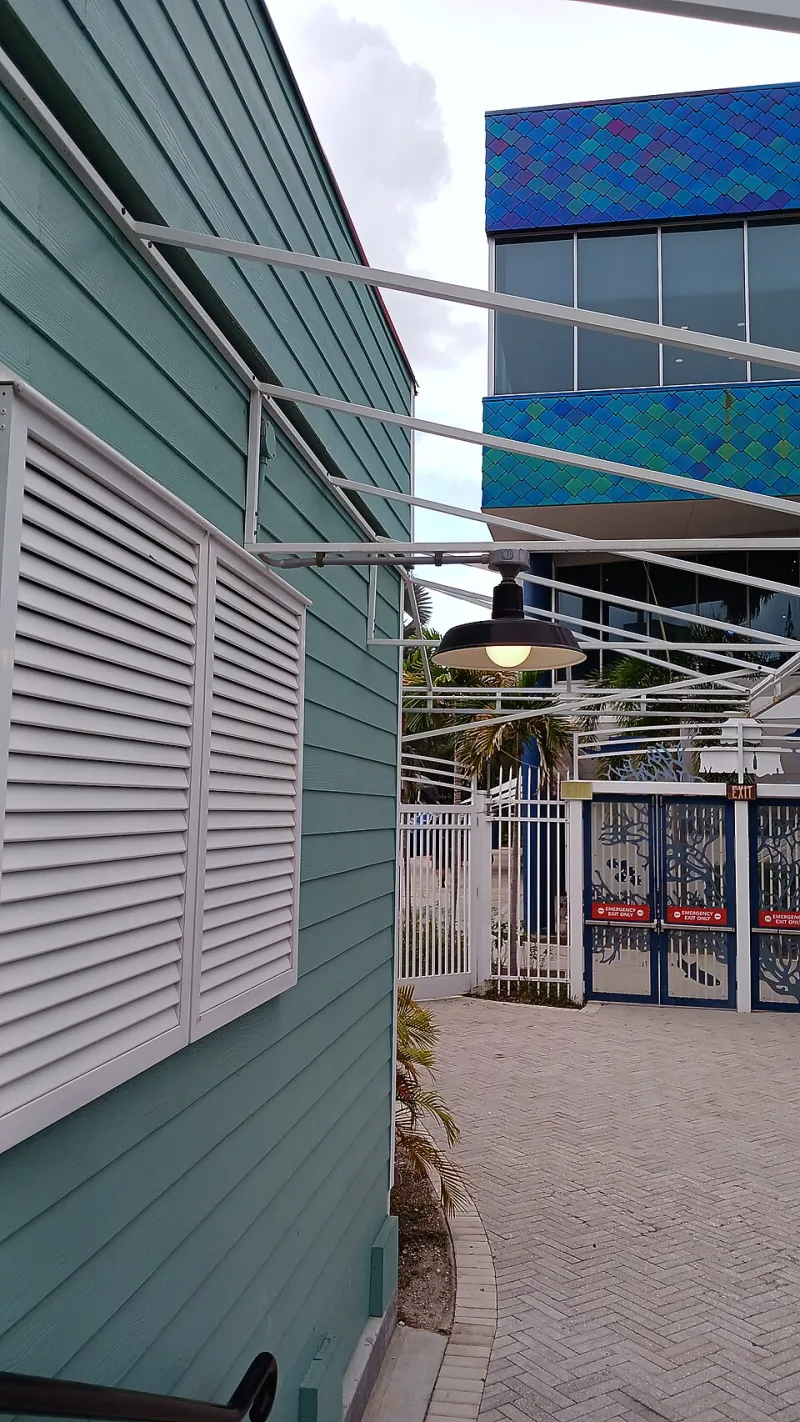
Photo: MatthewHoobin, CC0, via Wikimedia Commons
In many small commercial premises, ordinary lighting and emergency lighting share the same ceiling, the same switches and sometimes the same circuit. Only one of them, however, has a life-safety role. Fixed wiring inspections, portable appliance testing and consumer unit maintenance are often well established in a property manager’s diary. Emergency lighting can remain in the background until a monthly test reveals a fitting that no longer works, or a fire risk assessor asks for evidence that it has been maintained.
The legal position is not obscure. In England and Wales, the Regulatory Reform (Fire Safety) Order 2005 places duties on the responsible person to keep escape routes and exits safe, and emergency lighting forms part of that wider fire safety regime where a risk assessment identifies a need. Equivalent duties apply under fire safety legislation in Scotland and Northern Ireland. BS 5266-1 provides the recognised framework for emergency lighting design, installation and maintenance. The practical challenge for a small business is not usually the principle; it is turning the principle into a routine that survives staff changes, busy trading periods and limited budgets.
Begin with the fire risk assessment
Emergency lighting should follow the fire risk assessment, not precede it. The assessment should identify escape routes, windowless rooms, open areas, changes of level, toilets, plant rooms and other locations where sudden loss of normal lighting could leave people disoriented or unable to reach an exit. It should also record the required duration and the type of emergency lighting provided.
A common weakness is the ad hoc addition of a fitting after a minor alteration without updating the assessment or the lighting register. Another is assuming that because a building has some exit signs, it has adequate emergency lighting. A property manager should keep a simple register of emergency luminaires and exit signs, cross-referenced to a plan. That register becomes the backbone of every subsequent test and repair.
The monthly flick test
The monthly check is a functional test. Each emergency luminaire and exit sign should be operated through its test switch or by simulating a failure of the normal supply, allowing enough time to confirm that the lamp or LED illuminates and that the exit legend remains visible. This is not a duration test; it is a check that the fitting responds when called upon.
In practice, small premises can complete the monthly test in a short session if the fittings are accessible and the register is well organised. The value lies in consistency. Record the date, the initials of the person testing, the fittings checked and any defects found. A missing record is difficult to distinguish from a missed test when an insurer or fire risk assessor asks for evidence.
The annual duration test
The annual test is more demanding. The normal supply is isolated and the emergency lighting is left to operate for its rated duration, commonly three hours, although one-hour fittings may be acceptable in some circumstances where the fire risk assessment supports that approach. The test should be planned rather than improvised.
For a small shop, office or workshop, this may mean testing outside trading hours, informing occupants in advance and arranging temporary torches or signage if the test affects escape routes. Lone working should be avoided. The result should be recorded as the duration actually achieved, not simply as a pass or fail. A fitting that provides twenty minutes of light instead of three hours has failed, even if it briefly illuminates.
Battery and fitting failures
Most emergency lighting faults are ordinary electrical and ageing faults rather than mysterious events. Sealed lead-acid, nickel-cadmium and lithium-based batteries degrade over time, particularly in warm ceiling voids. Short duration, dim output, flickering, a charge indicator that never settles, discoloured housings or a fitting that works only briefly after isolation are all warning signs.
Replacement must be like-for-like in chemistry, voltage and capacity. Fitting the wrong battery can damage the luminaire or compromise its performance. LED modules and drivers also fail, and exit sign legends can become faded, damaged or incorrect after refurbishment. Cleaning diffusers and checking that legends remain legible are small tasks with genuine safety value.
Self-contained fittings and central battery systems require different approaches. A property manager may be able to carry out the routine user checks, but maintenance and repair should be entrusted to a competent electrician. Emergency lighting is not a battery-swap task to be improvised during a quiet afternoon.
Records that satisfy insurers and assessors
A useful emergency lighting logbook should contain more than a list of dates. It should include the fitting register and location plan, commissioning information, test results, defects, remedial actions, battery replacements and the name of the competent person responsible. Insurers may ask for evidence that maintenance has been carried out; fire risk assessors will expect the records to match the building.
Digital records are acceptable if they are accessible, backed up and understandable to someone who did not create them. Each entry should identify the fitting, the type of test, the outcome, the action taken and the date. Records should survive changes of staff, managing agent or ownership.
When to involve an electrician
Persistent faults, multiple failures, central battery systems, alterations to escape routes and new fit-outs all justify professional attention. An electrician can test the installation, advise on replacement fittings and provide the certification and records that a small business needs. Where the fire risk assessment is unclear about the required provision, that is also the point to seek competent advice rather than adding another exit sign and hoping for the best.
A practical annual cycle is straightforward: review the register and risk assessment at the start of the year, carry out monthly flick tests, schedule the annual duration test in good time, and budget for battery and fitting replacement rather than treating it as an emergency. Custodian Electrical would rather see a small premises with a modest but honest logbook than a ceiling full of fittings and no evidence that anyone has checked them.